Two historic rivals sit tied at the top, while a new generation of contenders keeps closing the gap — a full ranking of most NBA championships by team
While individual greatness dominates most basketball conversations, the list of most NBA championships by team tells a different kind of story — one of organizational stability, front office continuity, and, in a handful of cases, sustained dynasties that spanned multiple eras and generations of star players. This ranking rewards franchises, not individuals, and it reveals just how much rarer true organizational excellence is compared to individual brilliance, which tends to appear far more frequently across league history than sustained team-wide success.
Most NBA Championships by a Player — Why Bill Russell’s Record May Be Unbreakable
Packers vs Bears: 213 Games, One Trophy, and a Streak Just Broken
The Complete Franchise Rankings
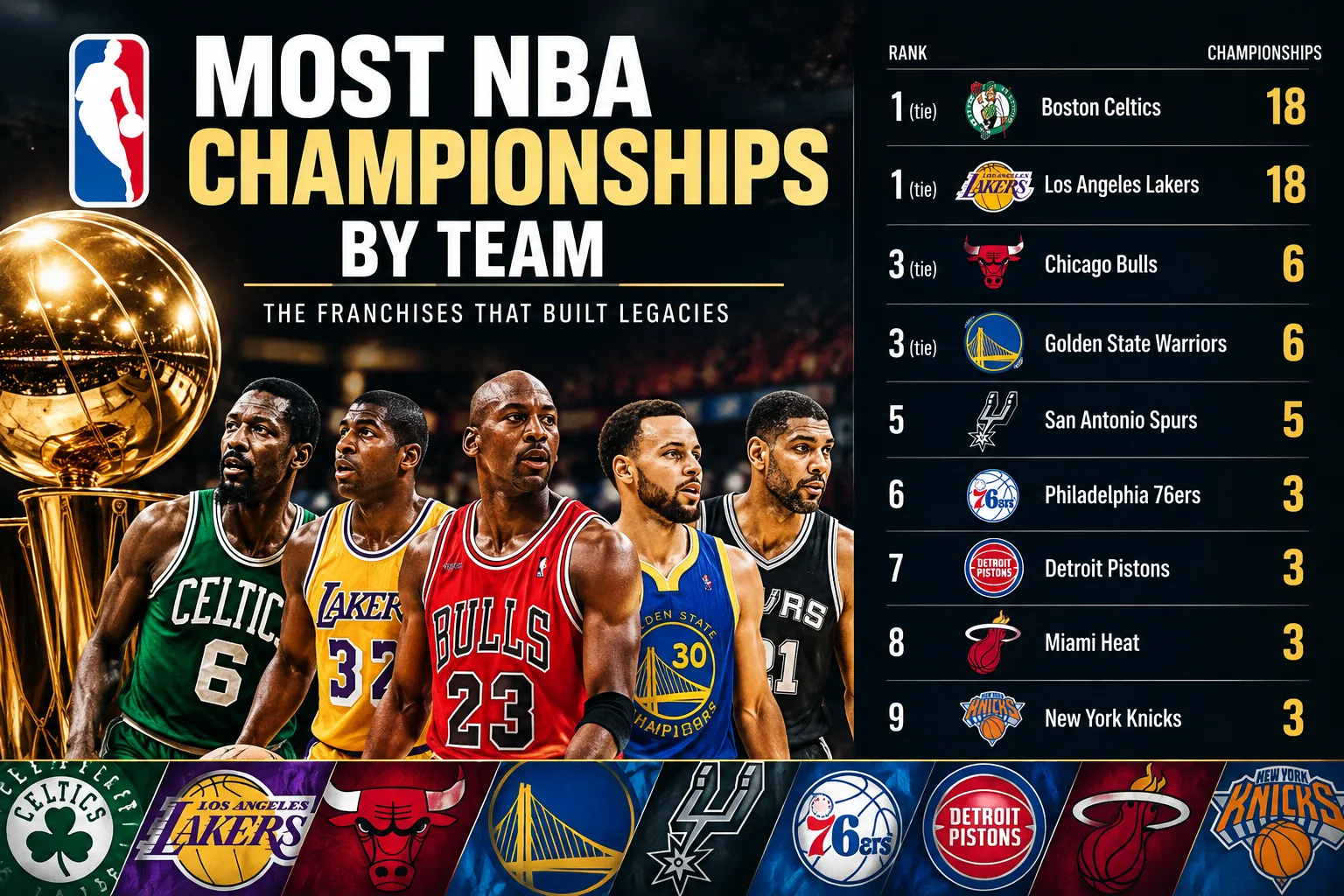
1 (tie). Boston Celtics — 18 Championships
The Boston Celtics’ championship total remains anchored by the extraordinary Bill Russell-era dynasty of the 1950s and 1960s, during which the franchise won eleven titles in thirteen seasons, including eight consecutive championships from 1959 to 1966. The Celtics added further titles throughout the Larry Bird era of the 1980s and a more recent championship in 2008, followed by another in 2024, extending one of the most storied championship traditions in American professional sports across nearly seven full decades.
1 (tie). Los Angeles Lakers — 18 Championships
The Lakers’ championship history spans multiple distinct dynasties across different cities and eras, beginning with the Minneapolis Lakers’ George Mikan-led titles in the early 1950s, continuing through the “Showtime” era behind Magic Johnson in the 1980s, the Shaquille O’Neal and Kobe Bryant three-peat from 2000 to 2002, and a 2020 championship won inside the pandemic-era Orlando bubble. Few franchises in professional sports history have sustained relevance and championship contention across as many distinct eras and rosters as the Lakers.
3. Chicago Bulls — 6 Championships
The Chicago Bulls’ entire championship history is concentrated within a single, historically dominant decade, built almost entirely around Michael Jordan and Scottie Pippen’s two separate three-peats in the 1990s. Unlike most franchises on this list, the Bulls have not won a championship since Jordan’s second retirement in 1998, making their title total the product of one of the most concentrated and complete dynasties in league history rather than sustained success across multiple generations of talent.
3 (tie). Golden State Warriors — 6 Championships
The Golden State Warriors’ championship total combines an early title from the franchise’s Philadelphia era in 1947 and their 1975 championship while based in Oakland, along with four more recent titles won during the Stephen Curry-led dynasty between 2015 and 2022. This modern run, built around historically efficient three-point shooting and a core that stayed remarkably intact across nearly a decade, represents one of the most tactically influential championship stretches in recent NBA history.
5. San Antonio Spurs — 5 Championships
The San Antonio Spurs won five championships between 1999 and 2014, anchored throughout by Tim Duncan’s quiet, fundamentally sound two-decade career. The Spurs’ organizational stability, including a coaching tenure under Gregg Popovich that spanned nearly three decades, allowed the franchise to sustain championship-level competitiveness across a remarkably long window without a single true rebuilding period, a rare feat in professional sports team-building.
6. Philadelphia/Golden State Warriors Predecessor Era and Sixers — 3 Championships
The Philadelphia 76ers, tracing their history back to the Syracuse Nationals franchise, have won three championships across their history, most recently in 1983 behind Julius Erving and Moses Malone. The franchise’s extended championship drought since then reflects how difficult sustained contention has become even for historically successful organizations operating in a much more competitive modern landscape.
7. Detroit Pistons — 3 Championships
The Detroit Pistons won back-to-back titles in 1989 and 1990 behind their physical, defense-first “Bad Boys” roster, and added a third championship in 2004 with a team built almost entirely around defensive identity and balanced scoring rather than a single dominant superstar, an unusual championship model compared to most other franchises higher on this list.
8. Miami Heat — 3 Championships
The Miami Heat’s championship history includes a title alongside Dwyane Wade and Shaquille O’Neal in 2006, followed by two more championships during LeBron James’s four-season stint with the franchise from 2010 to 2014, a run that produced four consecutive Finals appearances and helped establish the modern template for superstar-driven “super team” roster construction.
9. New York Knicks — 3 Championships
The New York Knicks’ championship history includes titles in 1970 and 1973 behind Willis Reed and Walt Frazier, followed by a 53-year drought that finally ended with their 2026 championship over the San Antonio Spurs, one of the most significant championship-drought resolutions in modern league history for one of the NBA’s original marquee franchises.
10. Milwaukee Bucks — 2 Championships
The Milwaukee Bucks won their first championship in 1971 behind a dominant Kareem Abdul-Jabbar, then waited exactly fifty years for their second title in 2021, led by Giannis Antetokounmpo’s dominant Finals performance, one of the longer championship gaps among the league’s original-era franchises.
Most NBA Championships by Team — Full Rankings Table
| Rank | Team | Championships | Most Recent Title |
|---|---|---|---|
| 1 (tie) | Boston Celtics | 18 | 2024 |
| 1 (tie) | Los Angeles Lakers | 18 | 2020 |
| 3 (tie) | Chicago Bulls | 6 | 1998 |
| 3 (tie) | Golden State Warriors | 6 | 2022 |
| 5 | San Antonio Spurs | 5 | 2014 |
| 6 | Philadelphia 76ers | 3 | 1983 |
| 6 (tie) | Detroit Pistons | 3 | 2004 |
| 6 (tie) | Miami Heat | 3 | 2013 |
| 6 (tie) | New York Knicks | 3 | 2026 |
| 10 | Milwaukee Bucks | 2 | 2021 |
Why the Celtics-Lakers Tie Matters
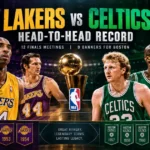
The fact that most NBA championships by team currently ends in a tie between the Celtics and Lakers isn’t a coincidence of history — it reflects two franchises that have remained relevant across nearly every distinct era of professional basketball. Both organizations have successfully rebuilt around new generations of stars multiple times, from George Mikan and Bill Russell in the earliest decades, through Magic Johnson and Larry Bird’s 1980s rivalry, into the modern era’s Kobe Bryant and more recent championship runs. Very few professional sports franchises in any league have managed this level of sustained, multi-generational success, making the Celtics-Lakers rivalry one of the defining storylines of the sport’s entire history.
How Modern Parity Has Changed Team-Level Success
The most NBA championships by team list also reveals just how much harder it has become for any single franchise to accumulate championships at the pace earlier dynasties managed. Since 2011, twelve different franchises have won a championship, including several, like the Denver Nuggets, Toronto Raptors, and Oklahoma City Thunder, claiming their first-ever title during this stretch. Modern salary cap rules, luxury tax penalties, and expanded free agency movement have made it significantly more difficult for any team to retain a championship-caliber core for more than a few consecutive seasons, a dramatic shift from the extended dynasties that defined earlier decades of league history.
Franchises Still Chasing Their First Championship
Several long-standing NBA franchises remain without a championship despite decades of competitive relevance, a notable absence from the most NBA championships by team conversation. Teams like the Phoenix Suns, Utah Jazz, and Indiana Pacers have each reached the NBA Finals multiple times without capturing a title, underscoring just how difficult it is to convert sustained regular-season and playoff success into an actual championship, even for historically competitive organizations with strong front offices and passionate fan bases.
The Coaching Continuity Factor
A recurring theme among the franchises highest on the most NBA championships by team list is unusually stable coaching and front office leadership. Gregg Popovich’s nearly three-decade tenure with the San Antonio Spurs allowed the organization to maintain a consistent culture and player development philosophy across multiple championship rosters, while Red Auerbach’s dual role as coach and later general manager gave the Celtics a similar continuity advantage during their dynasty years. The Lakers, by contrast, have won championships under a wider variety of head coaches, including Pat Riley, Phil Jackson, and Frank Vogel, suggesting that while coaching continuity clearly helps sustain success, it isn’t strictly necessary for a historically talented organization with strong overall roster-building infrastructure.
Regional and Market Advantages
It’s worth acknowledging that market size and regional appeal have historically played some role in which franchises accumulate championships most consistently, a dynamic reflected throughout the most NBA championships by team rankings. Large-market teams like the Lakers and Knicks have often been able to attract star talent through free agency and trade demands more easily than smaller-market franchises, even though several smaller-market teams, including San Antonio and Milwaukee, have proven that disciplined organizational culture can overcome market size disadvantages when it comes to actually winning championships. This tension between market size and organizational excellence remains a frequently debated dynamic in broader conversations about competitive balance across the league.
How Draft Success Has Shaped the Rankings
Nearly every franchise near the top of the most NBA championships by team list built its championship core through exceptional draft-day success rather than relying primarily on trades or free agency. The Spurs drafted Tim Duncan first overall in 1997, the Bucks drafted Giannis Antetokounmpo fifteenth overall in 2013, and the Warriors built their dynasty core around Stephen Curry, Klay Thompson, and Draymond Green, all originally acquired through the draft rather than external roster additions. This pattern suggests that sustained franchise success is often rooted less in big-market financial advantages and more in scouting departments and player development systems capable of consistently identifying and developing star-level talent internally.
What History Suggests About Future Dynasties
Given how thoroughly modern salary cap rules and luxury tax penalties have discouraged extended championship dynasties, most analysts expect the gap at the very top of the most NBA championships by team list to narrow only gradually in the years ahead, rather than through any single team rapidly closing in on the Celtics or Lakers. Franchises like the Warriors, Spurs, and Bulls each demonstrated that concentrated, multi-year championship windows remain achievable under the right combination of drafting, player development, and roster continuity, even if replicating a decades-spanning dynasty on the scale of Boston or Los Angeles appears far less realistic under today’s more restrictive team-building rules.
Final Thoughts
The list of most NBA championships by team ultimately reflects organizational excellence sustained across generations, rather than any single dominant era or star player. The Celtics and Lakers’ shared position atop this list, built through entirely different eras and rosters decades apart, represents one of the rarest achievements in professional sports: the ability to remain championship-relevant across nearly the entire history of a league. As modern parity continues reshaping how championships are distributed across the NBA’s thirty franchises, expect this list to keep growing more competitive at the margins, even as the top of the rankings likely remains anchored by these same two historic rivals for the foreseeable future.
Frequently Asked Questions
Which NBA team has won the most championships? The Boston Celtics and Los Angeles Lakers are tied for the most championships in league history, with eighteen titles apiece.
How many championships have the Golden State Warriors won? The Golden State Warriors have won six championships total, including four during their Stephen Curry-led dynasty between 2015 and 2022.
Which NBA franchises have never won a championship? Several long-standing franchises, including the Phoenix Suns, Utah Jazz, and Indiana Pacers, have reached the NBA Finals multiple times but have never won a championship.
🔹🔹 Follow us on Facebook 🔹🔹