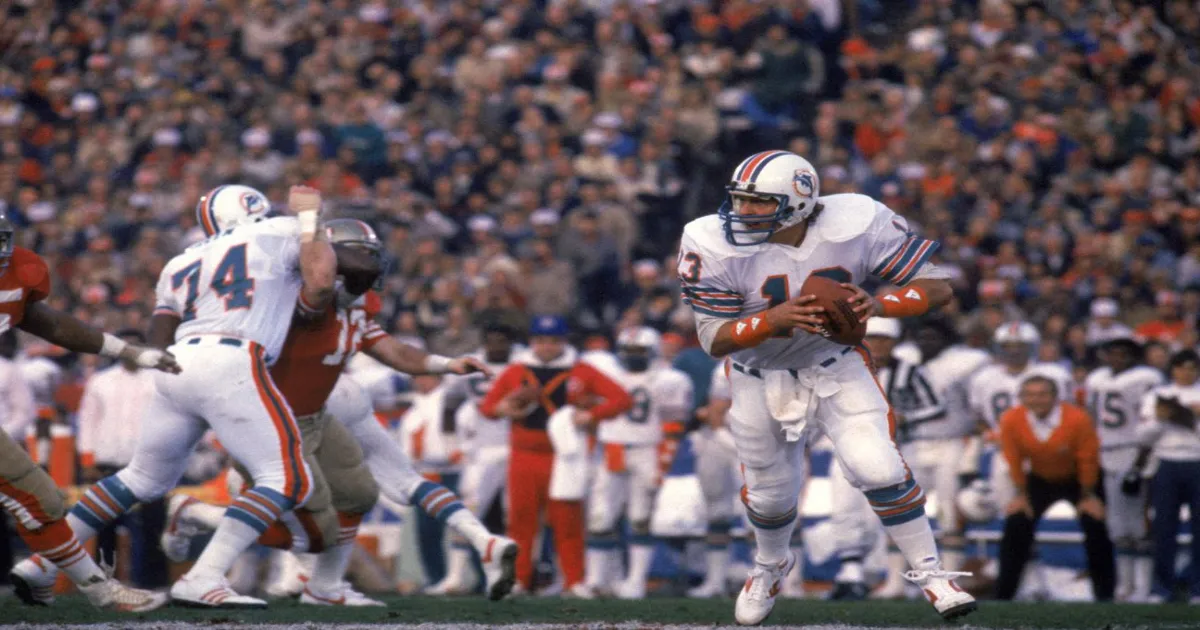
Youngest Quarterbacks to Start a Super Bowl: Dan Marino’s Record Still Stands
Starting a Super Bowl is one of the biggest milestones in an NFL quarterback’s career. Reaching the championship game requires a team to survive a demanding regular season and win through the playoffs, making the opportunity rare even for talented young players. Doing it before turning 24 is an even more unusual achievement.
For more than four decades, Dan Marino held the record as the youngest quarterback to start a Super Bowl. Marino was just 23 years and 127 days old when he led the Miami Dolphins onto the field for Super Bowl XIX in January 1985. Although the Dolphins lost to Joe Montana and the San Francisco 49ers, Marino’s age at the time established a mark that generations of quarterbacks would struggle to approach.
In February 2026, New England Patriots quarterback Drake Maye came remarkably close to breaking that record. At 23 years and 162 days old, Maye became the second-youngest quarterback to start a Super Bowl, missing Marino’s mark by only 35 days.
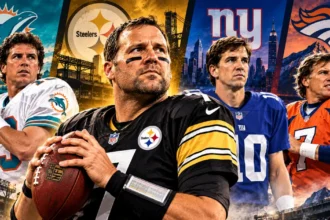
Their appearances highlight an important distinction in NFL history: reaching a Super Bowl at a young age is not the same as winning one. Ben Roethlisberger, Patrick Mahomes and several other quarterbacks have reached the championship game early in their careers, but their ages, results and places in the record books differ.
Most Playoff Wins by an NFL Quarterback: Tom Brady’s 35
Drew Brees’ 9-Game Streak: The NFL’s Consecutive 300-Yard Passing Record
Dan Marino: The Youngest Quarterback to Start a Super Bowl
Marino’s appearance was remarkable because he had reached the Super Bowl in only his second professional season. Selected by Miami with the 27th overall pick in the 1983 NFL Draft, he quickly established himself as the franchise’s starting quarterback. His strong rookie campaign was followed by an extraordinary second season in which he emerged as one of the league’s most productive passers.
During the 1984 regular season, Marino threw for 5,084 yards and 48 touchdowns. Both figures set NFL single-season records at the time, and his passing-yardage total broke the previous record held by Washington quarterback Joe Theismann. Marino’s performance earned him the NFL Most Valuable Player award.
The Dolphins finished the regular season 14–2 and advanced through the playoffs to reach the Super Bowl. Their offense was built around Marino’s passing ability, with receivers such as Mark Clayton and Mark Duper providing major contributions.
However, Super Bowl XIX did not end with a championship for Miami. San Francisco won 38–16, with Joe Montana leading an efficient performance against the Dolphins’ defense. Marino’s youth and record-breaking season remained significant, even though his team fell short of the title.
Marino’s record has endured because reaching the Super Bowl so early requires an unusual combination of quarterback readiness, team quality and postseason success. Many highly regarded young quarterbacks have enjoyed promising starts to their careers, but relatively few have reached the championship game within their first two seasons.
Drake Maye: The Closest Challenger in Super Bowl LX
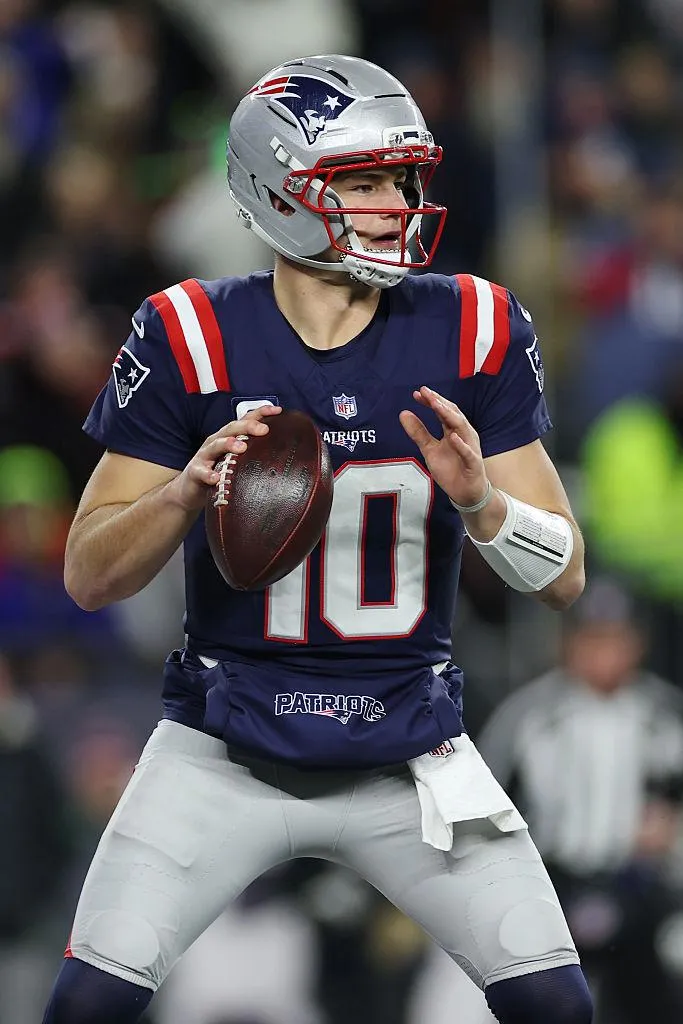
Drake Maye came within 35 days of Marino’s record when he started Super Bowl LX in February 2026 for the New England Patriots against the Seattle Seahawks.
At 23 years and 162 days old, Maye became the second-youngest starting quarterback in Super Bowl history. His appearance placed him ahead of several established names on the historical leaderboard, including Ben Roethlisberger, who had held a prominent position on the list since his appearance in Super Bowl XL.
Maye entered the NFL after playing college football at North Carolina. The Patriots selected him with the third overall pick in the 2024 NFL Draft, making him a central part of the franchise’s rebuilding plans following the end of its long championship era.
His early career placed him in a position to challenge Marino’s record. The Patriots reached the Super Bowl during Maye’s second NFL season, giving him the opportunity to become the youngest quarterback ever to start the game.
The record ultimately remained with Marino. Maye was younger than most Super Bowl quarterbacks in history, but he was not quite young enough to move into first place.
The comparison between the two quarterbacks is especially interesting because both reached the Super Bowl early in their careers. Marino did it during his second season in 1984, while Maye reached the championship game during his second NFL season in 2025. In both cases, their teams advanced quickly rather than waiting several years for their quarterbacks to become established veterans.
Their Super Bowl results were different from what a championship-focused narrative might suggest: reaching the game itself is a separate achievement from winning it. Maye’s appearance added a new chapter to the record without ending Marino’s long-standing place at the top.
Full List of the Youngest Quarterbacks to Start a Super Bowl
The following table highlights quarterbacks who started a Super Bowl at a particularly young age. Ages are measured on the date of the game, and the Super Bowl number and season are included to distinguish appearances across different eras.
Rank | Quarterback | Age at start | Super Bowl | Team |
|---|---|---|---|---|
1 | Dan Marino | 23 years, 127 days | XIX (1985) | Miami Dolphins |
2 | Drake Maye | 23 years, 162 days | LX (2026) | New England Patriots |
3 | Ben Roethlisberger | 23 years, 340 days | XL (2006) | Pittsburgh Steelers |
4 | David Woodley | 24 years, 97 days | XVII (1983) | Miami Dolphins |
5 | Jared Goff | 24 years, 112 days | LIII (2019) | Los Angeles Rams |
6 | Patrick Mahomes | 24 years, 138 days | LIV (2020) | Kansas City Chiefs |
7 | Tom Brady | 24 years, 184 days | XXXVI (2002) | New England Patriots |
8 | Jalen Hurts | 24 years, 189 days | LVII (2023) | Philadelphia Eagles |
9 | Drew Bledsoe | 24 years, 347 days | XXXI (1997) | New England Patriots |
10 | Joe Burrow | 25 years, 65 days | LVI (2022) | Cincinnati Bengals |
10 | Russell Wilson | 25 years, 65 days | XLVIII (2014) | Seattle Seahawks |
This list focuses on quarterbacks who started the game, not every quarterback who appeared on a Super Bowl roster. It also distinguishes the age record from records for winning the championship or receiving Super Bowl MVP honors.
One important correction: Jared Goff started Super Bowl LIII in February 2019 against the New England Patriots, not Super Bowl LI. The Patriots faced the Atlanta Falcons in Super Bowl LI, with Tom Brady starting for New England.
Ben Roethlisberger: A Young Starter Who Won the Super Bowl
Ben Roethlisberger is an important name on this list because his early Super Bowl appearance ended in a championship. He was 23 years and 340 days old when he started Super Bowl XL for the Pittsburgh Steelers on February 5, 2006.
The Steelers faced the Seattle Seahawks in Detroit. Pittsburgh won 21–10, earning Roethlisberger a Super Bowl championship in only his second NFL season.
Roethlisberger had already helped Pittsburgh reach the AFC Championship Game during his rookie season, although the Steelers lost to the Patriots. In his second season, the team returned to the playoffs and advanced through three road games to reach the Super Bowl.
His championship victory demonstrates why the youngest-starting-quarterback record and the youngest-winning-quarterback record must be treated separately. Marino started a Super Bowl at a younger age, but his Dolphins lost. Roethlisberger was older when he started his first Super Bowl, yet he left the game with a championship.
Roethlisberger’s performance in Super Bowl XL was not statistically spectacular. He completed nine of 21 passes for 123 yards, with two interceptions, but Pittsburgh’s defense and running game helped secure the victory. The result also illustrates that a quarterback’s Super Bowl legacy cannot be measured through passing statistics alone.
Patrick Mahomes: An Early Start to a Championship Career
Patrick Mahomes started Super Bowl LIV for the Kansas City Chiefs on February 2, 2020, at 24 years and 138 days old. The Chiefs faced the San Francisco 49ers in Miami, and Mahomes helped Kansas City secure a 31–20 victory.
Mahomes’ path to the Super Bowl was different from Marino’s. He spent most of his rookie season as a backup to Alex Smith before becoming Kansas City’s starter in 2018. His first season as the full-time starter ended with the NFL MVP award, and the Chiefs reached the AFC Championship Game.
Kansas City returned to the playoffs the following season and advanced to Super Bowl LIV. Mahomes threw for 286 yards and two touchdowns in the championship game, adding a rushing touchdown as the Chiefs overcame a 10-point fourth-quarter deficit.
His performance earned him Super Bowl MVP honors. At the time, Mahomes was the youngest quarterback to win Super Bowl MVP, although the record has to be considered separately from the age at which a quarterback starts a Super Bowl.
Mahomes’ career also shows how a quarterback can reach the championship early without setting the absolute youngest-starter record. He was younger than many previous Super Bowl quarterbacks but older than Marino, Maye and Roethlisberger when they made their first starts.
Jared Goff and the Rise of Young Super Bowl Starters
Jared Goff’s appearance in Super Bowl LIII provides another example of a quarterback reaching the championship early in his career. Goff was 24 years and 112 days old when the Los Angeles Rams faced the New England Patriots in February 2019.
The Rams had selected Goff with the first overall pick in the 2016 NFL Draft. His rookie season was difficult, but his development accelerated after Sean McVay became head coach in 2017.
Los Angeles reached the playoffs in both 2017 and 2018, winning the NFC Championship Game in the latter season to earn a place in Super Bowl LIII. The Rams lost 13–3 to New England in a defensive contest that featured limited scoring and few sustained offensive drives.
Goff’s appearance illustrates that young quarterbacks can reach the Super Bowl through different developmental paths. Some become immediate starters and lead productive offenses early in their careers. Others experience an adjustment period before their teams become championship contenders.
His place on the youngest-starters list reflects the Rams’ rapid improvement under McVay and the team’s ability to reach the championship while Goff was still in his early twenties.
Why the List Includes Quarterbacks From Different Eras
The youngest-starting-quarterback leaderboard includes players from the 1980s through the 2020s. However, the number of recent names should not automatically be taken as proof that teams are consistently reaching Super Bowls earlier than they did in the past.
Several factors influence a quarterback’s age when starting a Super Bowl.
First, draft age matters. A quarterback who enters the NFL at 21 or 22 has a different timeline from a player who spends several years in college before turning professional. Even if both players reach the Super Bowl in their second season, their ages on game day may differ considerably.
Second, teams vary in how quickly they hand over the starting job. Some rookies start immediately, while others spend time behind a veteran quarterback. A player who sits for a season can still become a Super Bowl starter early in his career, but his age will naturally be higher.
Third, the quality of the roster around the quarterback matters. A young passer may join a team with an established defense, experienced receivers and a strong running game. Another quarterback may enter a rebuilding organization that needs several seasons to become competitive.
Finally, playoff success depends on more than individual quarterback development. A team must win its conference championship to reach the Super Bowl. A talented young quarterback can perform well for years without ever making it to the game.
These factors help explain why Marino’s record has survived for so long. The achievement depended on both his age and the timing of Miami’s successful season.
Youngest Quarterback to Win a Super Bowl
Starting a Super Bowl and winning one are separate milestones. The youngest-quarterback-to-win record is especially notable because the player must reach the championship game and finish the season with a victory.
Ben Roethlisberger became the youngest quarterback to win a Super Bowl when Pittsburgh defeated Seattle in Super Bowl XL. At 23 years and 340 days old, he became a champion before his 24th birthday.
Patrick Mahomes won his first Super Bowl at 24 years and 138 days old, when Kansas City defeated San Francisco in Super Bowl LIV. Tom Brady was 24 years and 184 days old when he won Super Bowl XXXVI with the Patriots against the St. Louis Rams.
Russell Wilson was 25 years and 65 days old when Seattle defeated Denver 43–8 in Super Bowl XLVIII. Wilson’s Seahawks dominated the game, with the defense producing an early safety and repeatedly disrupting Peyton Manning’s offense.
Marino’s record as the youngest starting quarterback therefore does not make him the youngest Super Bowl winner. Miami lost Super Bowl XIX, and Marino never won a championship during his career. Maye’s appearance in Super Bowl LX also did not give him the opportunity to take the youngest-winner record.
The distinction is worth emphasizing in any discussion of NFL history: age records describe when a milestone occurred, while championship records describe the result.
Why Dan Marino’s Record Has Lasted More Than 40 Years
Marino’s record has survived multiple generations of highly regarded quarterbacks. Its longevity reflects how difficult it is for a player to reach the Super Bowl at such a young age, rather than simply how talented young quarterbacks can be.
Marino entered the league in 1983 and became Miami’s starting quarterback immediately. By his second season, he had already established himself as one of the NFL’s most productive passers. The Dolphins’ strong roster and successful regular season gave him a chance to reach the Super Bowl before his 24th birthday.
That combination is difficult to reproduce. A quarterback can develop quickly without having a championship-caliber team around him. Conversely, a strong team might reach the Super Bowl with a veteran quarterback rather than a young starter.
The record also demonstrates why career achievements do not always follow a predictable timeline. Some quarterbacks win championships early and spend the rest of their careers adding to their records. Others produce outstanding individual statistics but never return to the Super Bowl.
Marino’s case is particularly memorable because his record-breaking 1984 season and his Super Bowl appearance occurred so early in his career. The loss to San Francisco did not diminish the historical significance of his age, and the record remained intact even as new generations of quarterbacks entered the league.
Maye’s near-miss brought renewed attention to the milestone. His appearance demonstrated that Marino’s record is not impossible to approach, but the 35-day difference also shows how narrow the margin can be.
Could Dan Marino’s Record Be Broken?
Marino’s record could eventually fall, but a future challenger would need to meet several conditions at once.
A quarterback must enter the NFL at a young age, earn the starting role quickly and lead his team through a successful regular season. The team must then win multiple playoff games to reach the Super Bowl, all while the quarterback remains young enough to challenge the record.
The timing of the championship game is critical. A quarterback who turns 24 shortly before the Super Bowl may be too old to break Marino’s mark, even if he reaches the championship in his second NFL season.
Maye came close because New England reached Super Bowl LX while he was still 23. His age on the date of the game placed him second on the list, but Marino’s mark remained out of reach.
Future quarterbacks could challenge the record if they become starters early and their teams build competitive rosters around them. However, predicting when that might happen would be speculative. The record depends on a specific combination of age, team performance and postseason results.
For now, Marino remains the benchmark for the youngest quarterback to start a Super Bowl.
The Bottom Line
Dan Marino remains the youngest quarterback to start a Super Bowl, having led the Miami Dolphins into Super Bowl XIX at 23 years and 127 days old in January 1985. His record survived for more than four decades, despite the arrival of many talented young quarterbacks.
Drake Maye came closer than any other quarterback when he started Super Bowl LX at 23 years and 162 days old, missing Marino’s mark by just 35 days. Ben Roethlisberger, meanwhile, occupies a separate place in history as the youngest quarterback to win a Super Bowl.
The record is shaped by more than individual talent. Draft age, starting opportunities, roster strength and postseason success all determine how young a quarterback can be when he reaches the championship game.
Marino’s achievement remains one of the NFL’s most enduring age-related records. Whether a future quarterback eventually breaks it will depend on the rare combination of early-career success and a Super Bowl opportunity arriving at precisely the right time.
🔹 🔹 Follow us on Facebook 🔹 🔹



2 Comments